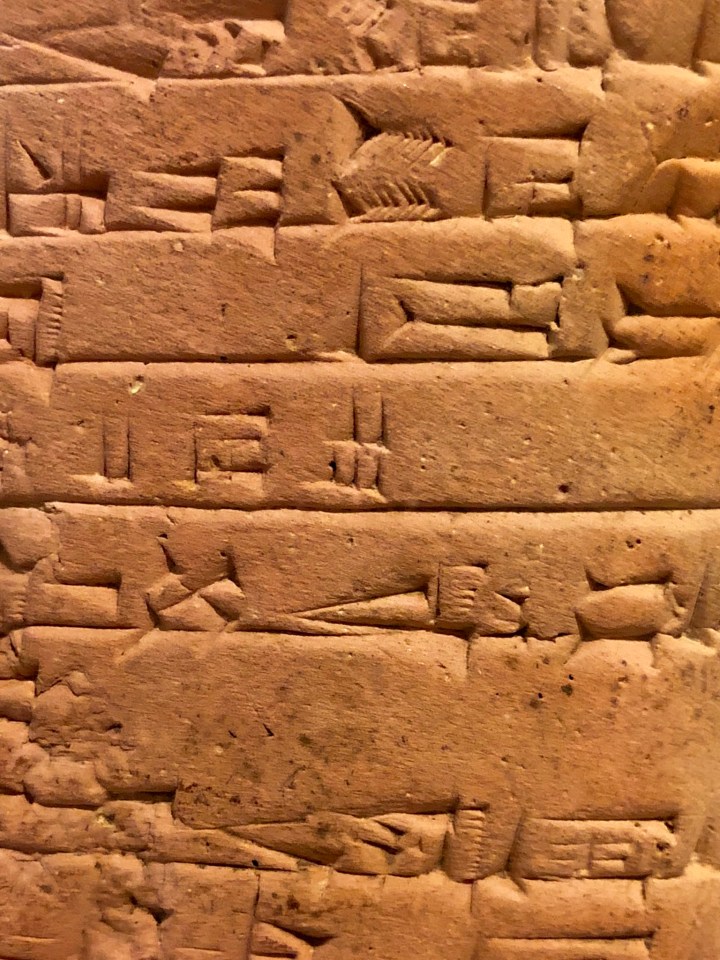
Astronomers look at old light, the light of distant stars emitted long ago, which reaches us only in the present. To sky watchers of ancient past, the changing patterns of the sun, moon, stars and planets shaped stories of how the world was created, views on the passage of time, and rhythms of planting, hunting and ceremonies. Human affairs were interwoven with the forces of nature. Up until about 50 B.C., scribes of the Babylonians kept astronomical diaries on clay tablets, and practiced mathematics as far back as 1800 B.C. In the 7th Century B.C., an Assyrian king, Ashurbanipal, assembled in the city of Nineveh (now the location of Mosul, Iraq) the first systematically organized library in the ancient Middle East, of which approximately 20,720 Assyrian tablets and fragments have been preserved in the British Museum.
Conquests of Alexander the Great later exposed the Greek world to these Babylonian texts, and to scholars onward throughout history. This formed the beginnings of our scientific tradition. The dance, always the dance. The dance of time. Permanence and change.
 Laurie A. Muir artist